John Deere riding mower stalls - gas cap fix and other causes
A John Deere riding mower that runs well for the first 15 to 30 minutes then stalls is most commonly caused by a clogged vent hole in the gas cap. The fix takes under two minutes and costs nothing. This page covers the diagnosis, the fix, what to do when the cap is not the problem, and a separate section for mowers that stall only when the blades are engaged.
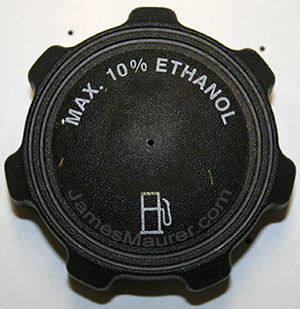
The cause
As the engine runs, the fuel pump draws fuel from the tank. For this to work, air must enter the tank to replace the fuel being consumed. On John Deere riding mowers, this is handled by a small vent hole in the gas cap.
When that hole clogs with dust, waxy residue from handling the cap, or fine debris, no air can enter the tank. The pump continues drawing fuel but the tank cannot equalize pressure. A vacuum builds inside the tank until fuel flow slows and stops. The engine stalls as if it ran dry.
A simple test confirms this immediately: remove the cap completely and run the mower. If it runs without stalling, the cap vent was the problem.
How to confirm it is the gas cap
Two quick tests confirm whether the cap vent is the problem before doing anything else.
Remove the gas cap entirely and set it aside. Start the mower and run it. If it runs without stalling, the cap vent is the cause.
After the mower has stalled, loosen the cap slowly. If you hear a hiss or feel a rush of air being sucked into the tank, the cap has been holding a vacuum. That confirms the vent is blocked.
How to clean the gas cap vent
Remove the gas cap and look at the top center. There should be a small pinhole. On some models the holes are on the inside of the cap rather than the top.
Try blowing through the hole. If no air passes, it is plugged.
Use a pin, needle, small wire, toothpick, or unfolded paperclip to clear the hole. Push through gently - do not enlarge it, just clear it.
On some caps there is a rubber liner or disc inside that needs to be removed first. Pull it out, clean the hole behind it, then replace the liner.
Blow through the hole again to confirm airflow. If the cap has multiple internal holes, clear each one.
Reinstall the cap. If the mower starts and runs without stalling, the cap vent was the cause.
This also applies to Craftsman, Cub Cadet, and Husqvarna riding mowers with the same vented cap design.
When the gas cap is not the problem
If the mower still stalls after cleaning the cap and confirming the vent is clear, work through these alternative causes. Each one has been documented as the actual fix on specific models.
Spark plug coil overheating
Confirmed on: X300, X500, GX345, othersPattern: Runs fine when cold. After 15 to 30 minutes, engine loses power or stops. Let it cool for 15 to 30 minutes and it runs again. Repeats.
This heat-fade-recover pattern on a mower that has already had the gas cap and fuel system checked is a strong indicator of a failing ignition coil. One approach to confirm: with the engine running rough, pull one spark plug wire at a time. When the engine behavior does not change after pulling a wire, that cylinder is already not contributing - its coil has likely failed under heat. Replacement coils run around $50. One X300 owner confirmed this fix after 3 years of stalling and 4 dealer visits that did not resolve it.
Corroded fuse providing ground through the diode
Confirmed on: X300 (fuse F4, 7-amp)Pattern: Engine runs for 15 minutes then cuts as if the ignition key was switched off. Restarts with a belch of dark smoke, runs for 45 more minutes, then repeats. Gas cap, fuel pump, fuel filters, and fuel hoses replaced with no improvement.
On the X300, find and clean or replace the 7-amp fuse labeled F4. This fuse provides ground through the diode and also appears to control the PTO. A corroded connection at this fuse can cause intermittent cutouts that look electrical and are easy for a dealer to miss. One owner resolved a 3-year problem with this fix after 4 dealer visits and multiple part replacements.
Debris in the fuel supply tube inside the tank
Confirmed on: 240 and others with internal tank filter or pickup tubePattern: Stalls after 30 to 45 minutes. Restarts and runs for another 30 to 45 minutes. Repeats predictably. New fuel filter, pump, and plug did not help.
The fuel supply tube that draws from the tank can accumulate debris. When the pump is drawing, debris gets pulled up to the tube opening and restricts flow. When the engine shuts off and sits, the debris falls back to the bottom of the tank. Disconnect the fuel line from the pump side, blow through the line toward the tank, and check for restriction. One owner pulled about half a teaspoon of debris from the tube end, which immediately resolved 3 months of intermittent stalling.
Deteriorated fuel line letting air into the system
Confirmed on: L100, L-series, others with older rubber hosesPattern: Runs fine, then loses fuel supply. No obvious leak. Fuel filter may appear to have normal fuel level but engine starves.
The short hose sections between the fuel filter and the fuel pump can crack or soften with age. A cracked hose does not necessarily drip fuel but can let air into the line, breaking fuel prime. Inspect all short hose segments and replace any that feel stiff, cracked, or show surface deterioration. Also check whether the fuel line has been pinched or kinked against the tank or frame - vibration from mowing can shift the line over time.
Dirty fuel pump vent
Confirmed on: GT262 and others with vented fuel pump housingPattern: Stalls under load. Gas cap vent is clear. Fuel system otherwise looks clean.
Some fuel pumps have a vent covered by a black sheet metal cap. If that vent clogs, the pump cannot function correctly. Locate the pump and check for any vent or breather opening. Cleaning with brake cleaner resolved the problem on a GT262 after the gas cap check came back clear.
Stuck float bowl solenoid switch
Confirmed on: LA105 and others with solenoid on carb float bowlPattern: Mower starts but immediately dies at higher RPMs. Restarting produces the same result. Gas cap and basic fuel system checks did not help.
There is a small switch mounted to the outside of the carburetor float bowl. On older machines that have sat unused, this switch can stick in the down position. Spray carb cleaner directly on the stuck switch and allow it to soak for a few seconds. It should pop back up. Once it moves freely, the mower should start and hold RPMs normally.
Debris or rubber particles in the fuel line
Confirmed on: X500 and othersPattern: Stalls with new fuel filter. Debris appears in the new filter quickly after installation.
Small rubber particles from a deteriorating hose or tank fitting can travel through the fuel system and clog a new filter within minutes of installation. If a new filter fills with debris, the source is upstream. Trace the fuel line from the tank, checking each hose segment, and replace the section that is shedding material. On one X500, small rubber pieces from a hose near the tank were clogging each new filter as soon as the engine ran.
Air filter foam sucked into the intake manifold
Confirmed on: JD 110 and othersPattern: Stalling on hills. All obvious causes checked. No mechanical cause found.
The foam pre-filter wrapper around the main air filter can separate and get pulled into the intake manifold. Remove the air filter assembly and inspect the opening to the intake - a piece of foam partially blocking the intake would cause progressive stalling under load. On one 110, this was a free fix that resolved a stalling problem that experts had attributed to the transmission.
Stalls when blades are engaged - different problem
If the mower runs normally but stalls as soon as the PTO or blade engagement lever is activated, this is a load problem rather than a fuel starvation problem. The gas cap fix does not apply here. Check these in order:
Safety switch on the seat not fully engaging
The seat safety switch has multiple contact prongs. If one prong is not seated in the correct position, the switch can partially disengage the electrical system when the PTO is activated. Check that all prongs on the seat switch are properly positioned. On one Sabre, pulling the prong through the correct slot resolved repeated stalling on blade engagement.
Worn bearing in the electric clutch
With the engine off, remove the blade belt and manually rotate the clutch pulley. If it feels rough or makes noise when turned by hand, the bearing is worn. A worn clutch bearing creates a significant load spike when the PTO is engaged, which can stall an engine that is otherwise running fine.
Deck spindles not lubricated
Dry spindle bearings increase the load on the engine significantly when the blades engage. Grease all deck spindles before assuming a more serious cause. One GT235 that was stalling on blade engagement ran without issue after a full deck lubrication.
Clogged carburetor jet restricting fuel under load
A partially clogged carb jet may allow enough fuel flow for the engine to idle and run without blades, but not enough to handle the additional load of the PTO. Clean the carburetor jet with brake cleaner rather than carb cleaner, which is more corrosive.
Notable reader reports
Selected from a large number of owner reports. Only entries with useful diagnostic detail are included.
Brought to the dealer 4 times with no resolution. Parts replaced: 2 fuel filters, 2 fuel pumps, fuel hoses, gas cap re-drilled. Still stalled. Eventually found and cleaned a corroded 7-amp fuse (F4) that provides ground through the diode. Problem resolved. Four dealer visits and all those parts, and it was a $0 fuse cleaning.
After winter storage, the mower started fine but only ran for about 25 minutes. Dealer replaced the ignition module. Still stalled after 25 minutes. Gas cap vent cleaning fixed it. The ignition module replacement cost money and time and had no effect on the actual cause.
The pinhole was plugged with a white, waxy material - a combination of skin oil and dead skin from repeatedly removing the cap with the palm of the hand. The hole was not visibly blocked but no air could pass through. A pin cleared it. This is worth checking before assuming the hole is clear just because it looks open.
No vent hole was visible at all. Checking by poking around the top of the cap found the hole had been fully lacquered over and was invisible. Clearing it allowed the mower to run for 30 minutes in a nearly 45-degree position without stalling.
When the vent hole stays plugged long enough, the fuel pump creates a vacuum inside the tank that can physically collapse the plastic. One owner found the tank had collapsed and needed full replacement. The mower had been running poorly for some time before the collapse. Keeping the cap vent clear is the only prevention.
After sitting unused, the mower would crank but immediately die at higher RPMs. Gas cap, fuel filter, and basic checks showed nothing. The small solenoid switch on the outside of the float bowl was stuck in the down position. Carb cleaner sprayed directly on it freed it within seconds.
New fuel filters kept filling with small rubber pieces almost immediately after installation. Traced the source to a deteriorating hose section between the tank and filter. Replacing that hose stopped the contamination.
Rather than clean the hole every season, one owner drilled and tapped a 1/8" hole in the cap, threaded in a small plastic elbow, and attached about 8 inches of vent tubing with a small screen/filter on the end. Mounted the filter so the cap cannot be lost. Cleaned the screen once per year since. No further stalling.
Questions that come up most
How do I know if the gas cap is the problem before taking the mower apart?
The simplest test takes 30 seconds. Remove the cap completely, set it aside, start the mower, and run it. If it runs without stalling with the cap off, the cap vent is the cause. The alternative quick test: loosen the cap one half-turn while the mower is running. If the stalling stops, the vent is blocked.
My gas cap does not have a visible hole. Is this a different cap?
Some models have the vent holes on the inside of the cap rather than the top center. Remove the rubber liner or inner disc and look for small holes behind it. On some older caps the hole has been lacquered over by the factory finish and is not visible - try poking the center top of the cap with a pin regardless of whether you can see a hole.
Should I try to make the hole bigger?
No. The hole is small on purpose. Enlarging it can introduce debris directly into the fuel. Clean it out with a pin or wire, blow through it to confirm airflow, and reinstall.
I cleaned the cap and it still stalls. What next?
Work through the alternative causes section above. The most common after the cap are: coil overheating (heat-fade-recover pattern), debris in the fuel line or tank pickup tube, and deteriorated hose sections letting air into the fuel system. On the X300 specifically, the F4 fuse corrosion is worth checking if the cap does not resolve it.
My mower runs fine until I engage the blades, then stalls. Is this the gas cap?
Probably not. Stalling on blade engagement is a separate symptom - it indicates a load problem rather than a fuel starvation problem. Check the seat safety switch prong position, grease the deck spindles, and inspect the electric clutch bearing before assuming the engine or carburetor is at fault.
Could a clogged cap cause the gas tank to collapse?
Yes. If the vent stays blocked long enough, the fuel pump creates a vacuum inside the tank that can physically deform or collapse the plastic. At least one owner found the tank had fully collapsed and needed replacement. Cleaning the cap vent at the start of each season is the prevention.
Does this problem apply to brands other than John Deere?
The same gas cap vent problem occurs on Craftsman, Cub Cadet, Husqvarna, and other riding mower brands that use a vented cap. The symptom, diagnosis, and fix are identical.
- If the mower does not stall but loses uphill power after warming up, that is a separate hydrostatic transmission issue. See John Deere won't climb hills for the transmission diagnosis and repair paths.
- If you have a lawn irrigation pump making a clicking noise and cycling on and off, see Sprinkler pump clicking noise: relay wire fix — a loose wire at the pump start relay is the most common cause.
The gas cap fix and alternative causes documented here are drawn from real owner reports across many years. Results vary by model, engine condition, and how the mower has been maintained. When in doubt about any repair involving fuel systems or electrical components, consult a qualified small engine technician.