Waverunner bilge pump not working - siphon tube fix
The factory siphon bilge pump on a 2008 Yamaha VX1100 stopped removing water from the engine compartment. The cause was a damaged siphon tube destroyed by pebbles in shallow water. Here is the full diagnosis, a DIY tube replacement for under $10, a check valve upgrade, and an electric backup pump install.
The cause
The ski was accidentally run in shallow water with a rocky bottom. Pebbles were audibly sucked through the intake and ejected out the back, then the engine was shut off immediately. The impeller survived, but the pebbles cut off the siphon tube that protrudes from the steerable nozzle at the rear.
On this 2008 Yamaha VX1100, there is no check valve from the factory. A damaged or missing siphon tube does not just stop the bilge from working - the broken tube can allow water from the exhaust stream to flow back through the hose and into the engine compartment while riding. Newer models have a check valve that prevents this. Older machines do not.
How the factory siphon system works
The factory bilge on this ski is a passive siphon system, not a powered pump. It works only while the ski is moving through the water. The components are:
- A white filter box with a screen that sits flush with the hull floor in the engine compartment
- A hose that runs from the filter box to the jet pump area
- A short siphon tube that protrudes into the water stream at the exhaust nozzle
As the jet pump pushes water through the nozzle, it creates suction that draws water from the engine compartment through the hose and filter. If the siphon tube is missing or damaged, that suction is broken and the system stops working.
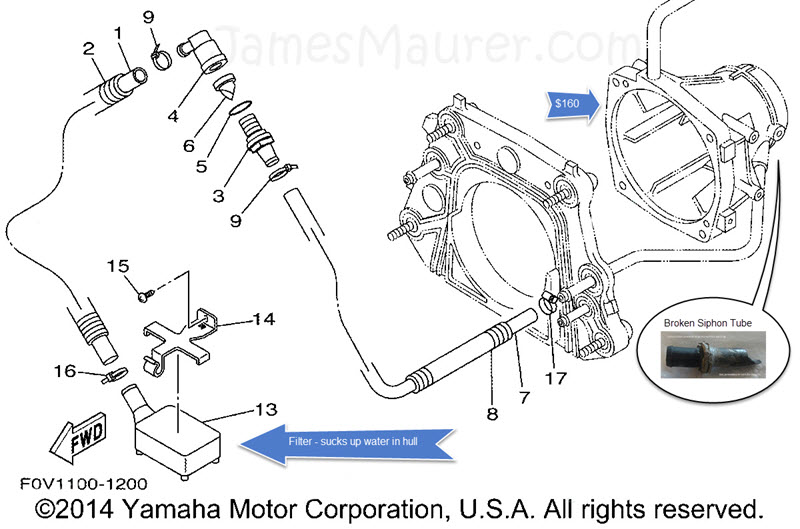
Bilge siphon system diagram. Items 7 and 1 are the hoses, item 13 is the filter screen. A clog in any of these stops the system. A missing siphon tube at the nozzle end breaks the suction entirely.
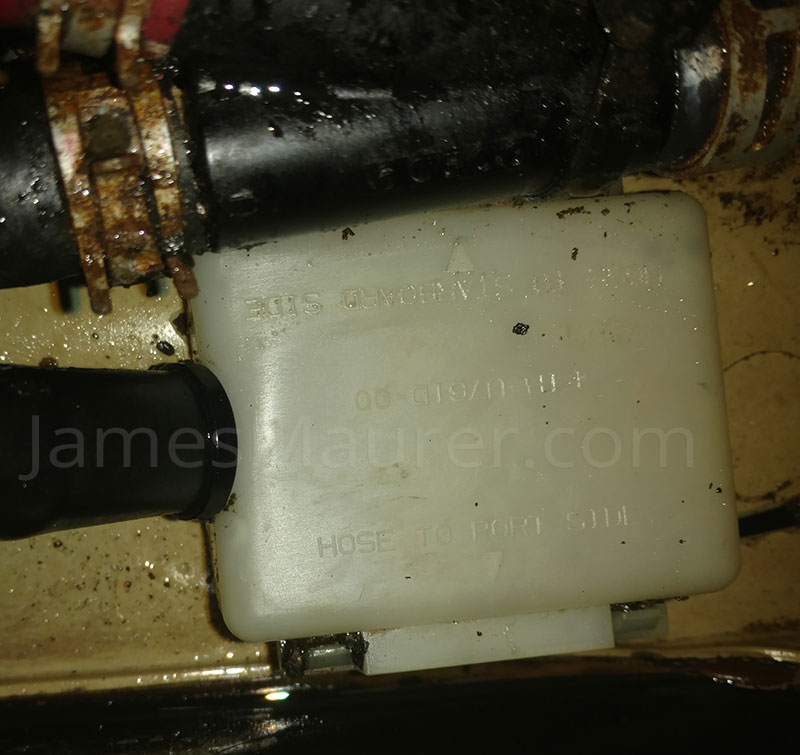
The original factory bilge siphon pump assembly in the engine compartment.
How to diagnose the problem
Before assuming the siphon tube is the cause, rule out a clogged hose or filter first. These steps work through the system from the easy end to the harder end.
Remove the hose from the white bilge filter box in the engine compartment.
Run water through the hose. If it exits out the back of the ski, the hose is clear.
Clean the filter screen on the white box and run water through that end as well. If flow into the engine compartment is good, the hose and filter are not the problem.
Inspect the siphon tube at the steerable nozzle (water exhaust) at the rear of the ski. Look for a short tube protruding into the water stream. If it is damaged, cut off, or missing entirely, that is the cause.
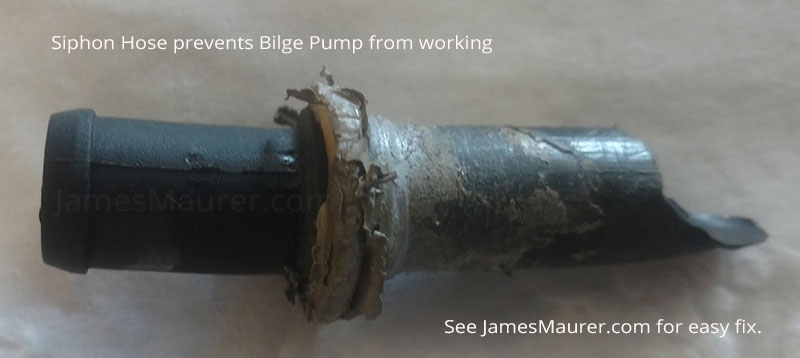
The broken siphon tube. The thin section to the right was originally protruding into the water stream at the exhaust nozzle. In this state it was allowing water to enter the engine compartment rather than being drawn out.
The fix - DIY siphon tube replacement
The dealer does not sell the siphon tube separately. The only OEM replacement is the entire jet pump nozzle assembly at around $160. The tube can be fabricated from two sizes of polyethylene tubing available at hardware stores for under $10 total.
| Part | Detail |
|---|---|
| 1/2" O.D. x 3/8" I.D. Polyethylene tubing | WATTS SPIG15 - Menards item 42141615 - 100 PSI at 70F |
| 3/8" O.D. x 1/4" I.D. Polyethylene tubing | WATTS MSPGE26 - Menards item 42141426 - 100 PSI at 70F |
Cut a 4-inch section of the 3/8" O.D. x 1/4" I.D. tubing. This is the main tube body.
Cut a 0.15-inch section of the 1/2" O.D. x 3/8" I.D. tubing. This short piece acts as a collar to prevent the tube from slipping through the exhaust nozzle.
Slide the short 1/2" collar piece to the center of the 3/8" tube and permanently glue it in place. Let it fully dry.
Insert the assembled tube into the jet pump water exhaust opening at the rear nozzle. Secure with epoxy and let it cure completely.
Reattach the rubber bilge hose to the new tube.
Test by running the ski in water and checking that the engine compartment stays dry.
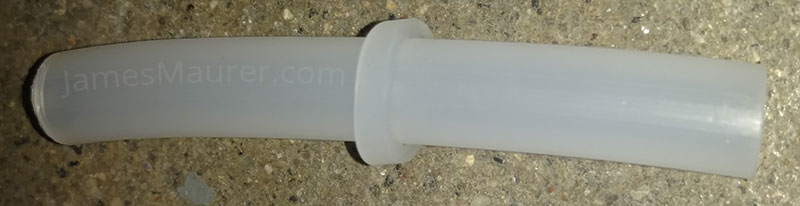
The assembled replacement siphon tube before epoxy. The short collar section of larger tubing in the center prevents it from slipping through the exhaust nozzle.
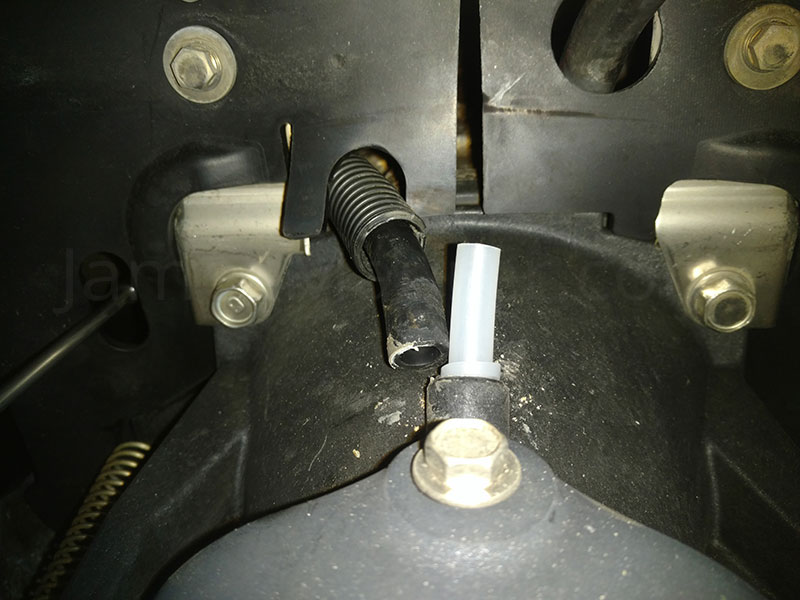
The new tube inserted into the water exhaust nozzle before epoxy. The collar holds it in position.
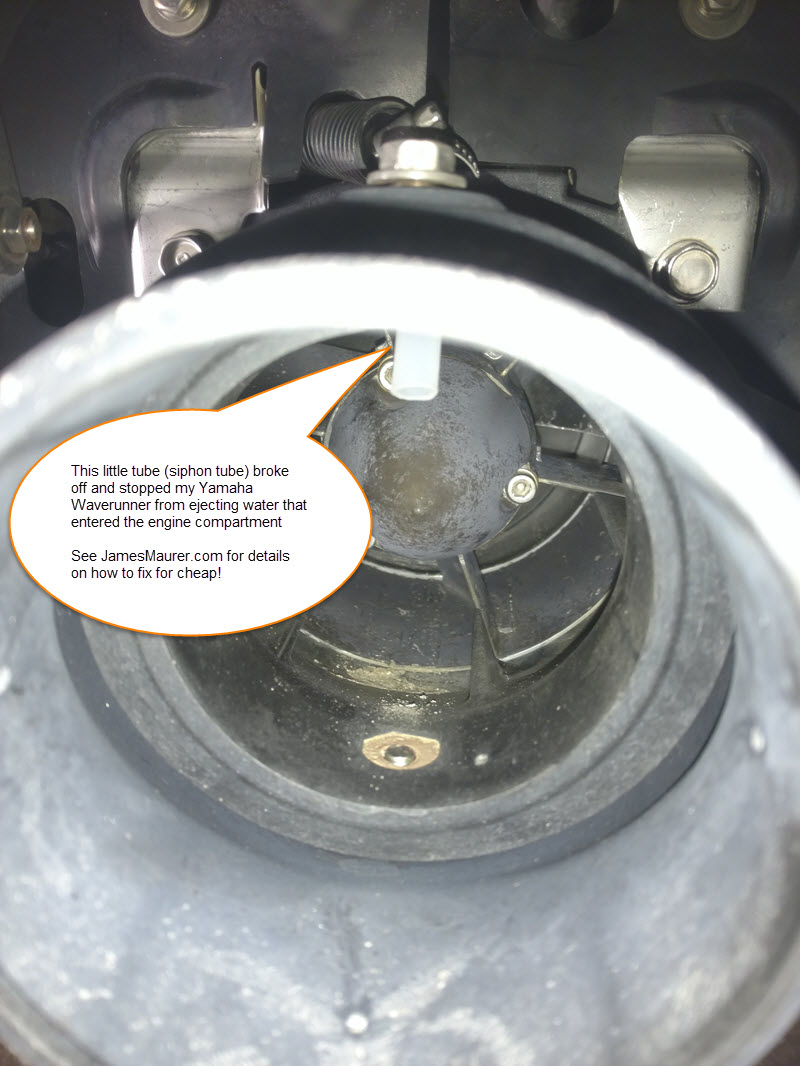
The completed replacement tube installed and connected.
Check valve upgrade
The 2008 VX1100 does not have a factory check valve on the bilge hose. This means a damaged siphon tube is not just a bilge failure - it can actively push water into the hull while the ski is moving. Adding a check valve prevents backflow if the tube is ever damaged again.
68N-5112T-00-00To check whether your existing valve is working, pull it off and blow on both ends. If air flows freely in both directions, the valve is no longer functioning as a check valve and should be replaced.
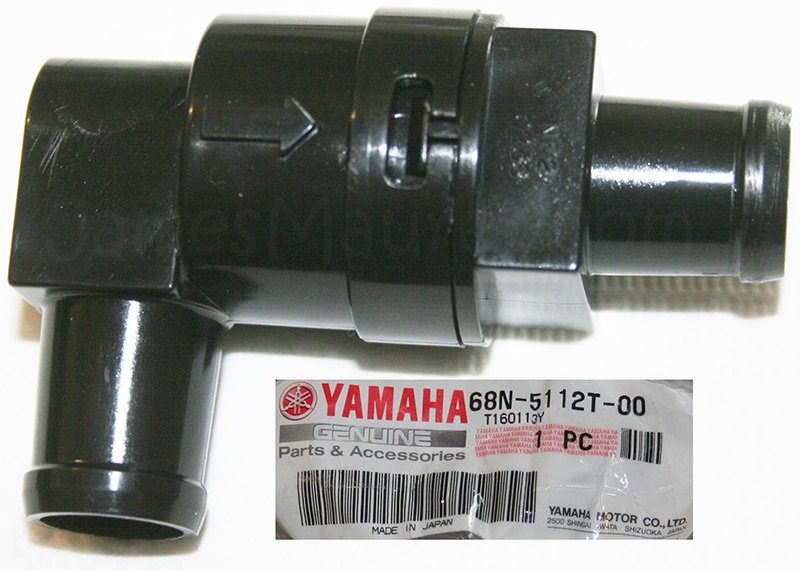
Yamaha OEM JOINT HOSE 68N-5112T-00-00. This replaces the original valve that does not prevent backflow. If your ski has this fitting already, test it by blowing on both ends before trusting it.
Electric bilge pump backup
The siphon system only works while the ski is moving. If water gets into the hull while stationary - stopped in large waves, for example - the siphon cannot remove it. An automatic electric bilge pump solves this. The two systems work together: the electric pump handles surges when the siphon is overwhelmed, and the siphon drains the remaining water once underway.
Because the electric pump cannot sit as low in the hull as the siphon filter box, it does not drain the compartment completely. This is normal - the siphon system handles the final drainage when underway.
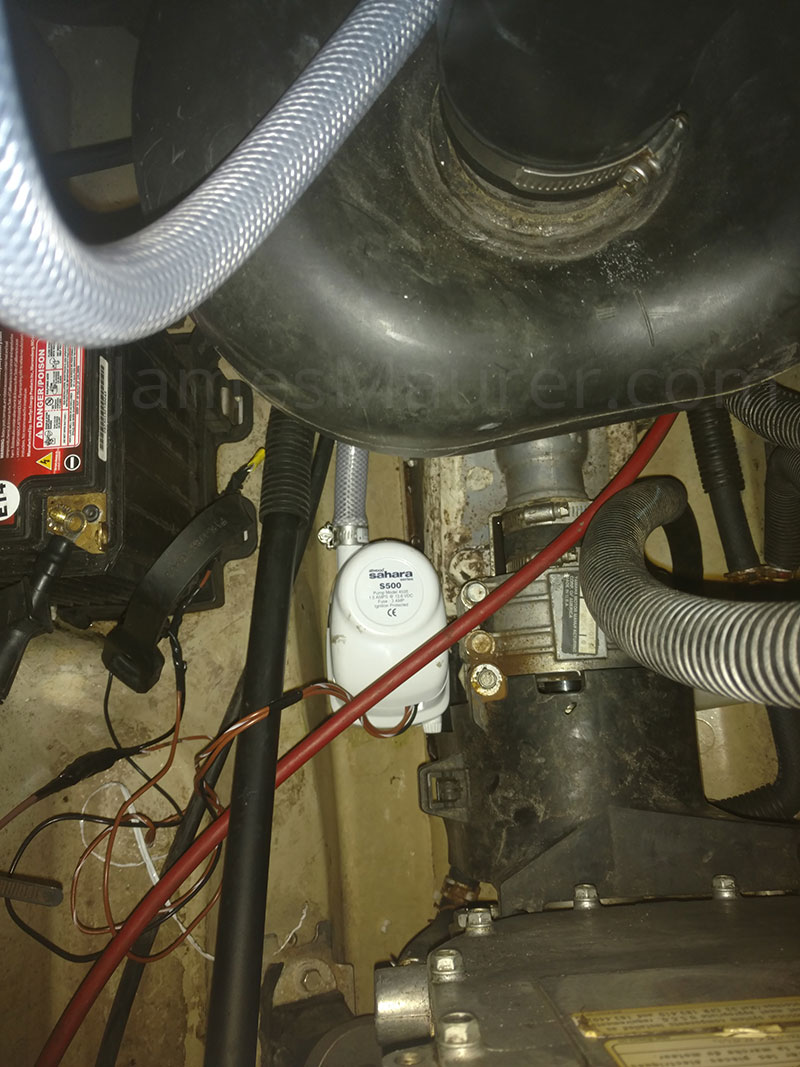
The Attwood Sahara 500 installed in the engine compartment. It serves as a backup when the siphon system is overwhelmed by large waves.
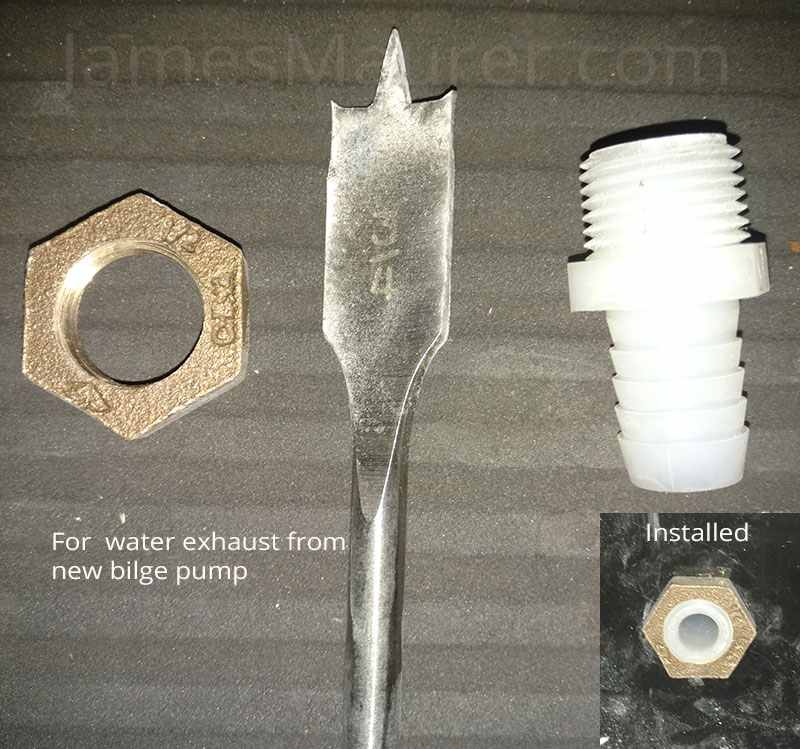
A new exhaust hole was drilled at the rear of the ski for the electric pump outlet. 5/8" braided tubing runs from the pump to this outlet.
The automatic float switch in the pump triggers from wave motion even when the hull is dry. On open water with small chop this causes the pump to cycle on and off unnecessarily, which drains the battery. A toggle switch was installed to disable the automatic function completely. When hitting large waves that are likely to put water in the hull, the switch is flipped on manually.
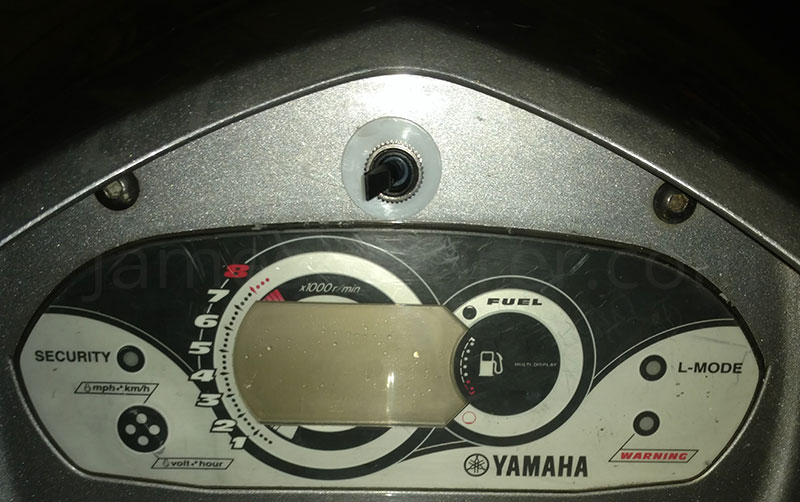
A two-position toggle switch from Ace Hardware. Left is off, right is on. The plastic washer seals the mounting hole. When switched on, the electric pump takes over when the siphon system cannot keep up.
Reader reports
One owner found the siphon tube was absent entirely, not just damaged. The ski was about to go to the dealer. Replacing the tube using this method got it back on the water without a dealer visit.
No siphon pump found in the rear compartment near the battery. On this model and year the system may be located elsewhere or may have been removed by a previous owner. Worth checking your model-specific documentation before assuming the system is present.
Filter paper was sucked into the bilge hose the previous season. After clearing that, the ski filled with water on the first run of the following year. The electric pump ran continuously overnight, which drained the compartment but suggested the pump float switch may have been stuck or that a continuous water source was present. Continuous pump operation after a water event is a sign to investigate rather than assume the problem is resolved.
Questions that come up most
How do I know if the siphon system is the problem and not a hull leak?
The siphon system works by drawing water out through suction created by the jet pump while the ski is moving. If the engine compartment fills while riding but drains when you get moving again, the siphon tube is the likely cause. If water is present even when stationary at the dock, the source may be a hull fitting, hose connection, or pump seal rather than the siphon tube.
My ski is older - does it have a siphon pump at all?
Not all models have one in the same location, and some older machines may have had the system removed by a previous owner. On the 2008 Yamaha VX1100 the bilge filter box is a small white box with a screen that sits flush with the bottom of the hull in the engine compartment. If you cannot find it, check whether your model year included one as factory equipment before assuming it is missing.
Does my ski have a check valve?
The 2008 Yamaha VX1100 does not have one from the factory. From what is documented, newer models do. To test your existing valve, pull it off and blow on both ends. If air passes freely in both directions, it is not functioning as a check valve.
Why is my electric bilge pump turning on when there is no water in the hull?
The automatic float switch in the pump can trigger from motion rather than actual water when jumping waves. Installing a manual toggle switch lets you override the automatic function and turn the pump on deliberately when you know conditions warrant it, rather than letting it cycle on battery power unnecessarily.
I hear water sloshing inside the ski but the engine compartment is dry. What is that?
Some hull designs have cavities or foam sections that can trap water separately from the engine compartment. This is a different situation from the siphon tube problem. If the engine compartment is confirmed dry and the ski is otherwise performing normally, the water may be in a sealed hull section that requires a different drainage approach.
Can I use the dollar store hard straw approach instead of polyethylene tubing?
The molded stopper on a rigid cup straw happens to be close to the right geometry. This has not been tested for longevity or pressure resistance. The polyethylene tubing approach with epoxy is the documented working solution. The straw idea is noted here as an untested alternative.
This documents a specific repair on a 2008 Yamaha VX1100. Part numbers, locations, and system design vary by model and year. Verify your model's configuration before purchasing parts. Any work involving drilling, epoxy, or electrical connections should be done carefully and ideally confirmed with someone familiar with your specific ski.