How to fix dead spots in lawn: the sod webworm soap test
Brown dead spots kept spreading across my lawn. My first guess was not enough water - but that zone gets watered an hour twice a day, so that was not it. My next guess was a dog, cat, or deer urinating in the area. The real answer turned out to be insects, and a simple dish-soap-and-water test brought them right to the surface.
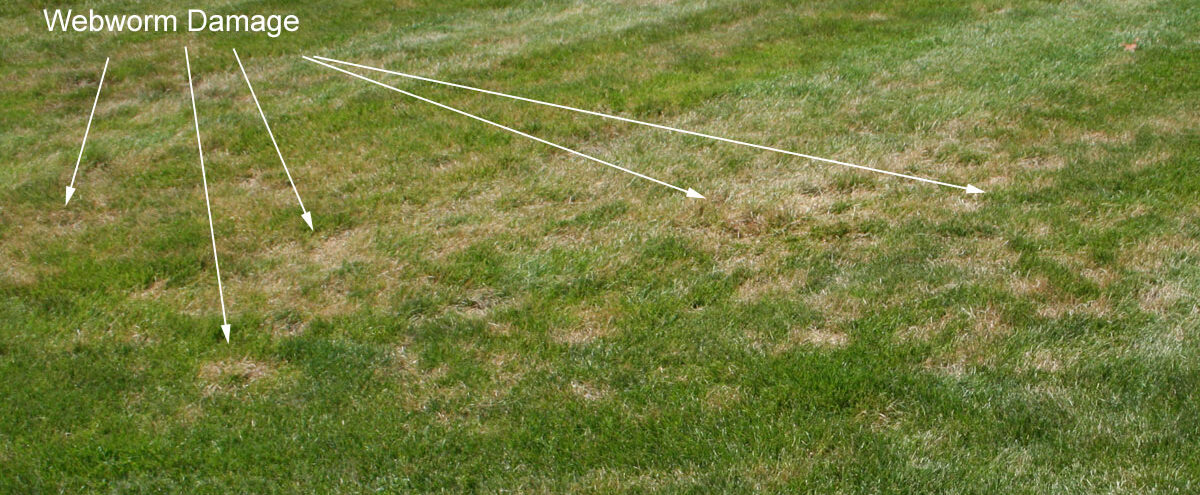
The test: dish soap and water
An old-timer in our town swears by a simple test for figuring out what is killing a lawn: spray or pour a mix of one gallon of water and two tablespoons of dish soap over one of the brown spots, wait a few minutes, then pull the grass apart to expose whatever is living down in the thatch. The soap irritates surface-feeding insects and drives them up where you can see them.
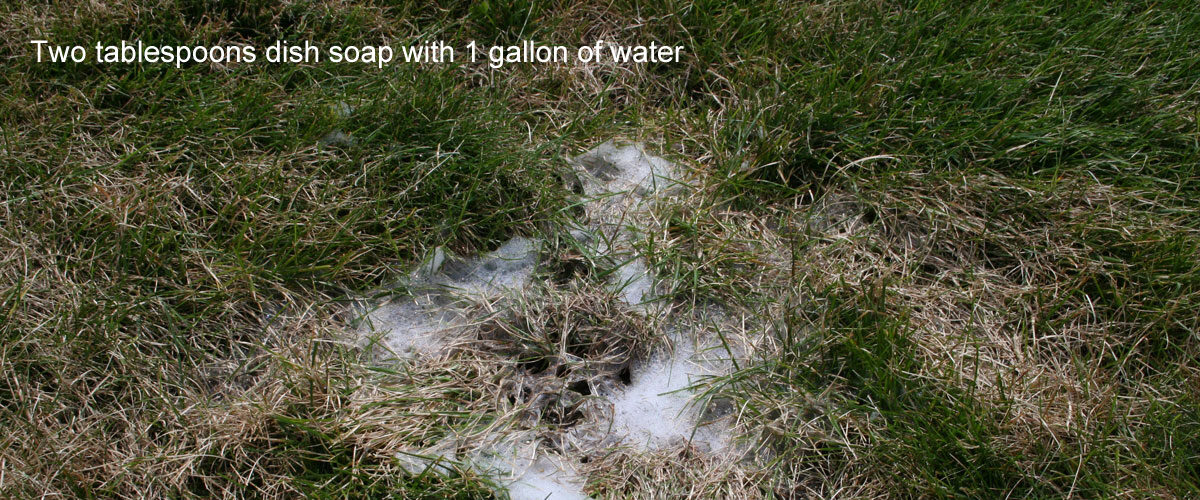
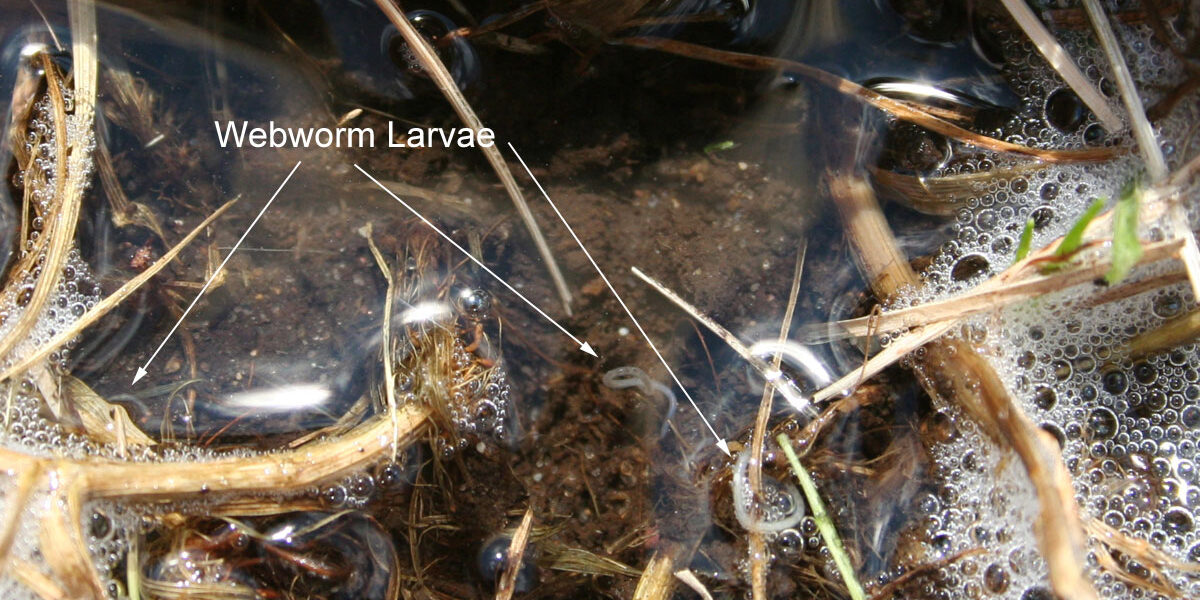
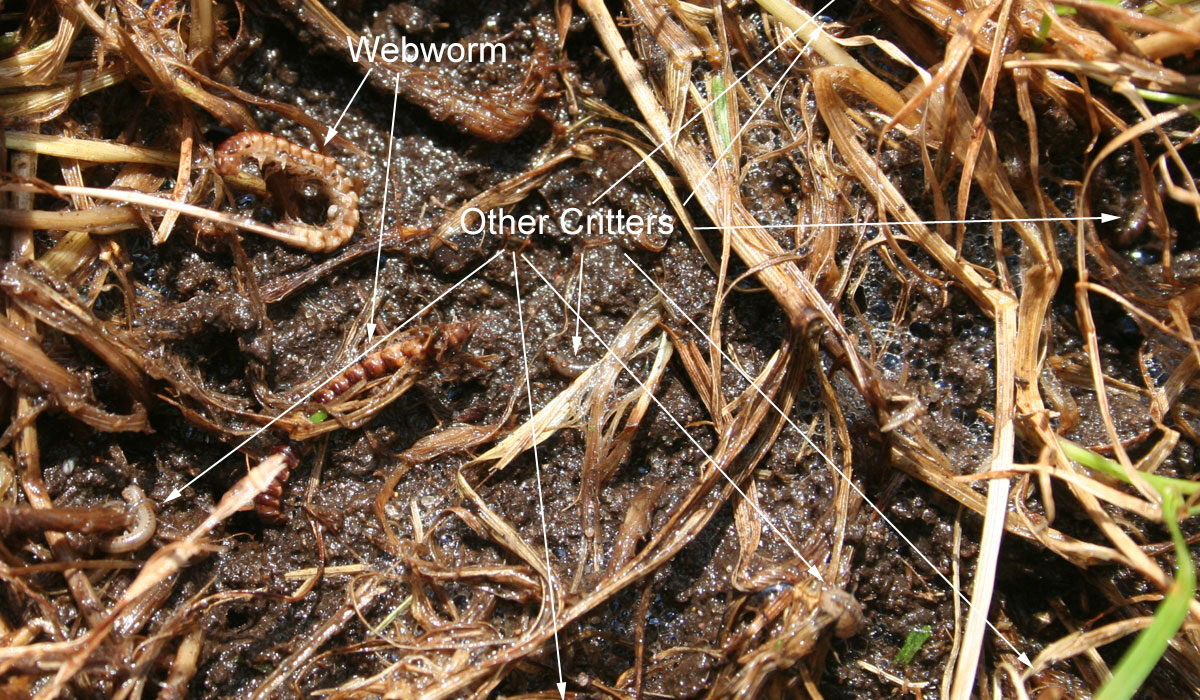
It worked like a charm. Within a few minutes the insects started coming up, and sure enough, it was sod webworm.
The cause: sod webworm
Sod webworm is the larvae - the caterpillar stage - that comes out at night and feeds on the grass, chewing the blades off right above the thatch line. Because they feed after dark, you see the spreading brown patches but rarely the insect itself during the day. A telltale sign is small green pellets down near the thatch called frass, which is the larvae's excrement.
The fix: how to get rid of sod webworms
Once the soap test confirmed insects, the fix was straightforward: I took a sample of the bugs to my local feed and supply store and picked up a granular lawn insecticide that covers sod webworms along with a number of other common lawn pests. Applied to the affected zones per the label, it stopped the damage and the lawn filled back in.
If you are not sure exactly what you have, that is the real value of the soap test - it does the hard part for you. Collect a few of the insects that surface, seal them in a jar, and bring them to a local feed and supply store or extension office. They can tell you exactly which product you need so you are not guessing.
When it is not sod webworm
The soap flush only finds insect problems. If you run the test and nothing comes up, the cause is probably something else. The common non-insect reasons for dead spots are:
- Drought or uneven watering - a sprinkler head not reaching that zone, or simply not enough water.
- Animal urine - dog, cat, or deer spots, which tend to be round with a darker green ring around the edge.
- Fungal disease - brown patch, dollar spot, and similar, which spread differently and are not driven up by soap.
No matter what kind of dead-spot problem you are seeing - patches, rings, or streaks - the soap-and-water test is a fast, cheap first step. In a few minutes you will know whether you are dealing with bugs, and if so, you will have a sample to identify.
Questions that come up most
How much dish soap and water do I use for the test?
Two tablespoons of liquid dish soap in one gallon of water, poured over a brown or dying spot about a square foot or two in size. The soap irritates surface-feeding insects and drives them up out of the thatch where you can see them.
How long before the insects come up?
Usually just a few minutes. Pour the soapy water, wait, then gently pull the grass apart. If insects are the cause, you will see them wriggling up to the surface.
What are the small green pellets in the grass?
That is frass - the excrement of the sod webworm larvae. Finding green frass down near the thatch line is a strong sign of webworm activity.
When do sod webworms feed?
At night. The larvae come out after dark and chew the grass blades off right above the thatch line, which is why the damage shows up as spreading brown patches but you rarely see anything during the day.
How do I get rid of sod webworms?
Confirm them first with the soap test, then apply a granular lawn insecticide that lists sod webworms on the label to the affected areas, following the label for rates and timing. That is what cleared them up here, and the lawn filled back in afterward. If you are not certain what surfaced, take a few of the insects in a sealed jar to a feed and supply store or county extension office and they will match you to the right product.
Will the dish soap hurt my lawn?
A small test patch with a mild dish-soap solution is a diagnostic, not a treatment, and is not enough to harm the grass. Rinse the area with plain water afterward. Do not soak the whole lawn in soap.
I did the test and nothing came up. Now what?
If no insects surface, the cause is probably not bugs. Look at the usual non-insect culprits: drought or uneven sprinkler coverage, dog or other animal urine, or a fungal disease like brown patch. The soap flush only finds insect problems.
This documents a real lawn problem and what resolved it. Insects and lawn diseases vary by region and by lawn - identify what you actually have (a local feed and supply store or county extension office can help) before applying any product, and always follow the insecticide label for rates, timing, and safety. The dish-soap test is a diagnostic; it is not a treatment.